Global Oceans – BALTIC: Mapping the Invisible in the Anthropocene
Global Oceans – Baltic is a transdisciplinary project at the intersection of marine research, immersive media art, and ecological climate protection. The focus is on the seagrass meadows of the Baltic Sea as vital „Blue Carbon“ ecosystems, which play a crucial role in carbon sequestration and climate regulation.
Based on the mobile research vessel ALDEBARAN, we combine scientific field research—such as acoustic underwater mapping and drone measurements—with artistic practice. Here, art is understood not as a mere illustration of research, but as an independent instrument of knowledge. The gathered environmental data, underwater sounds, and visual observations are translated into immersive VR worlds, sculptural data landscapes, and poetic soundscapes.
Through close cooperation with renowned partners such as the German Ocean Foundation and as an official part of the UN Decade of Ocean Science for Sustainable Development, the project creates new spaces for dialogue between science, art, and the public.
Global Oceans – Baltic makes invisible marine ecosystems tangible and opens up new ways to understand climate change and ocean conservation in the digital age.
Follow us on Instagram to get exclusive behind-the-scenes insights, experience everyday research on board, and be part of it firsthand!

As the project leader of „Augmented Realities in the Anthropocene,“ I reflect on an intensive and inspiring symposium that marked a significant milestone in our two years of work. It provided an excellent opportunity to explore the intersections of art, science, and technology within the context of the Anthropocene. The central themes—Anthropocene, artistic research, and augmented reality—were examined from diverse perspectives. We discussed how art can help understand and communicate the challenges of this epoch and highlighted artistic research as an independent mode of inquiry. Augmented reality was broadly interpreted, not merely as a technological tool but as a means to expand perceptions of reality and artistic expression.
The symposium’s varied formats were particularly valuable. The panel discussion, “Current Positions Between Artistic Practice and Research in the Anthropocene,” moderated by Dr.Axel Berg, showcased innovative approaches from both art and science, emphasizing the importance of interdisciplinary collaboration. Artist talks and presentations provided fascinating insights into projects, such as Dr.Johann Reißer’s Shells and Loops and my Interwoven Sculptures. A discussion on the project über.wunden illustrated how art can contribute to the processing of trauma.
The symposium raised critical questions that will continue to engage us: the balance between collectivity and individuality in artistic research, the archiving of creative processes, the role of AI in art and society, and the need for alternative funding models. It also emphasized that augmented reality is not just a technological extension but a conceptual one, enriching perspectives and forms of expression.
I had the oppurtunity to participate at the closing discussion with Prof. Andrew Perkis (NTNU Trondheim), Wendy Ann Mansilla (PhD), Prof. Ceenu George (TU Berlin), Silke Bartsch and Dr. Michael Fowler (TU Berlin), which underscored the importance of interdisciplinarity and provided valuable insights for future collaboration between art, technology, and the humanities.
In summary, the symposium was a great success, offering crucial impulses for the future of this dynamic and evolving field. The discussions were constructive and forward-thinking, underscoring the essential role of collaboration among art, science, and technology in addressing the challenges of the Anthropocene.
The full video documentation is available on YouTube through the following link, which leads directly to the playlist.
Project funded by:

artistic research
"Lost Volumes" a "City Scale Sculpture"
The artistic research project „Lost Volumes“ is deeply connected to developments in the field of Artificial Intelligence and, in particular, climate change. In a vibrant metropolis like Berlin, the profound changes in the biosphere are scarcely perceptible.
My vision encompasses a virtual sculpture that reflects the magnitude of the lost ice mass of the Vernagtferner, one of the last alpine glaciers. I aim for this lost volume that is transformed into a virtual sculpture to be observed from various vantage points. Through the overwhelming dimensions, all references to human scale are lost. „Lost Volumes“ becomes a reality expanding the city into previously unknown dimensions – an overlapping landscape that can be fully grasped only by walking through and flying over.
In addition to exploring new insights into the perception of intertwined sensory experiences in virtual sculptures, the central question for me is:
How can urban dwellers emotionally connect with the issue of climate change by being presented with visual representations of real processes?
The initial design has already been completed and can be accessed as a video below. This video projection showcases a panorama of Berlin overlaid with a three-dimensional volume describing the lost ice mass from 2009 to 2016 in its original scale. The multimedia presentation includes an audio collage titled „The Climb,“ created by Nicole Leeck. This collage is composed of recordings captured during the ascent to the glacier in October 2023.
Special thanks to Dr. Christoph Mayer from Ludwig-Maximilians-Universität in Munich for providing the crucial satellite data that has made this project possible.
Lost Volumes (2009-2016) – The Vernagtferner in Three Conceptual Views, video 2.32 min., audio tracks: Nicole Leeck, 2024, Berlin
Concept for the AR-Work „Lost Volumes“ a „City Scale Sculpture“, video 4.15 min., audio track: „The Climb“ (Nicole Leeck), 2023, Berlin
(Link: Documentation): Shown at the exhibition „Erweiterte Realitäten – Künstlerische Prozesse zum Anthropozän“
A Virtual Reality Project
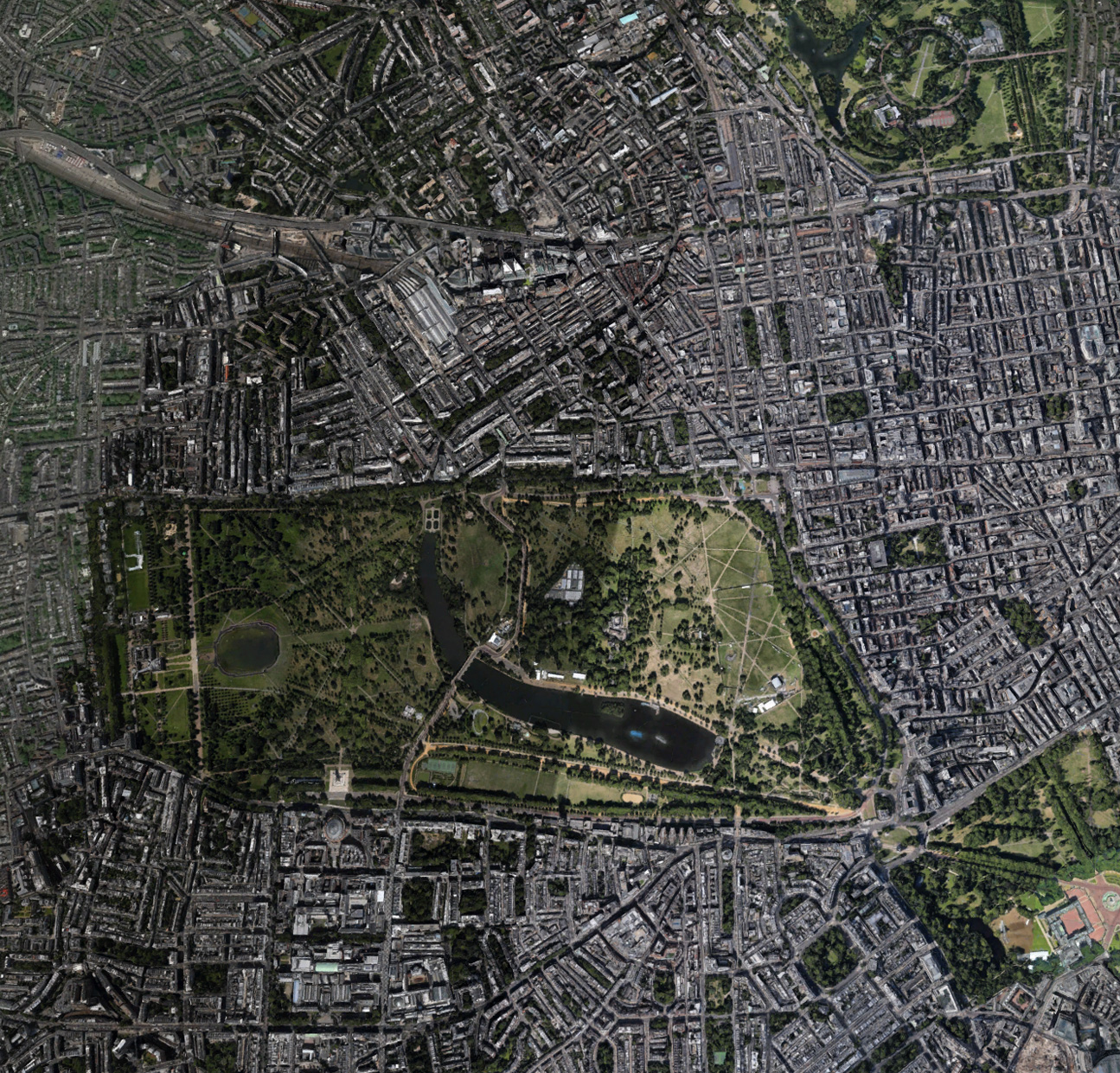
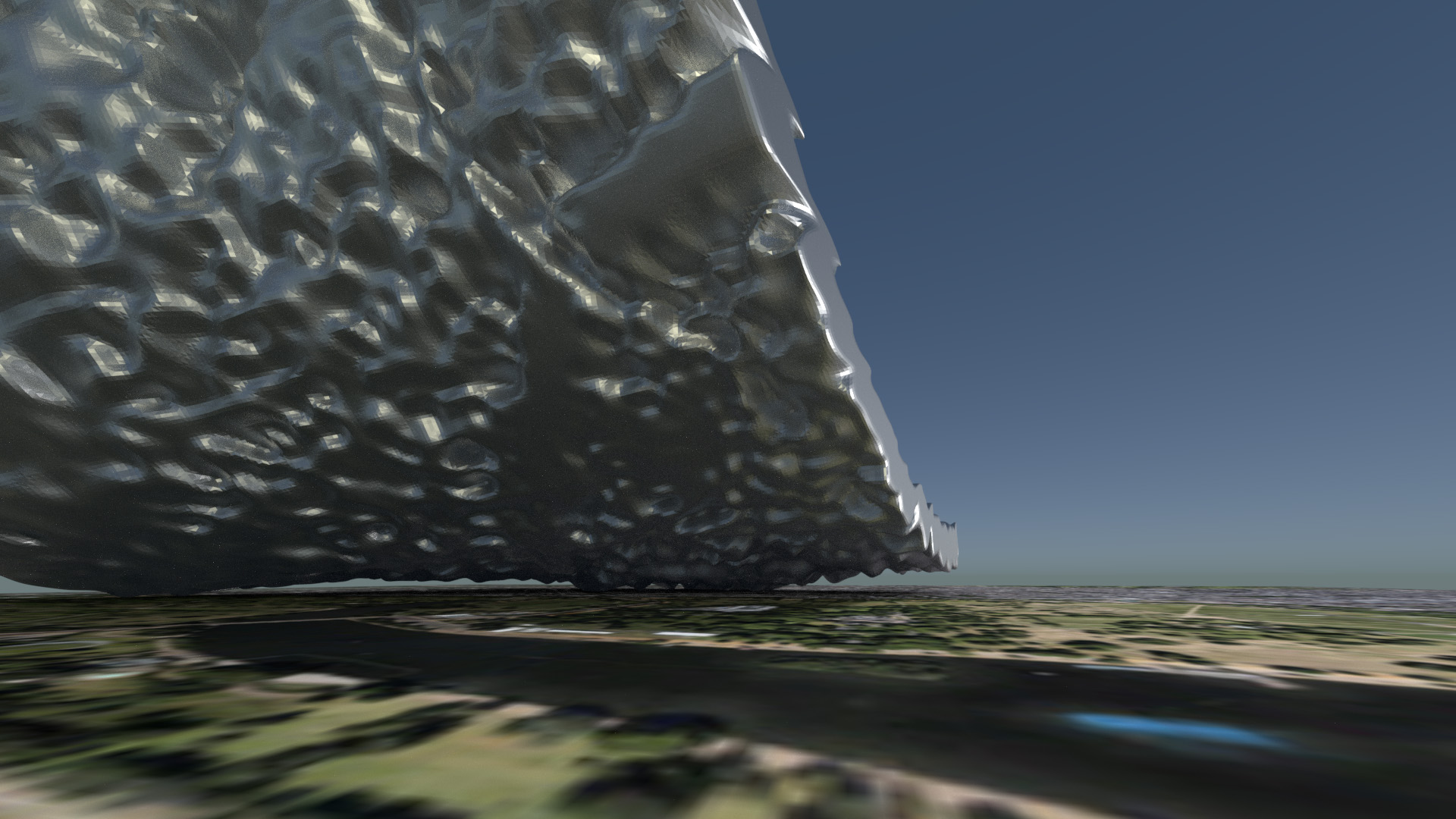
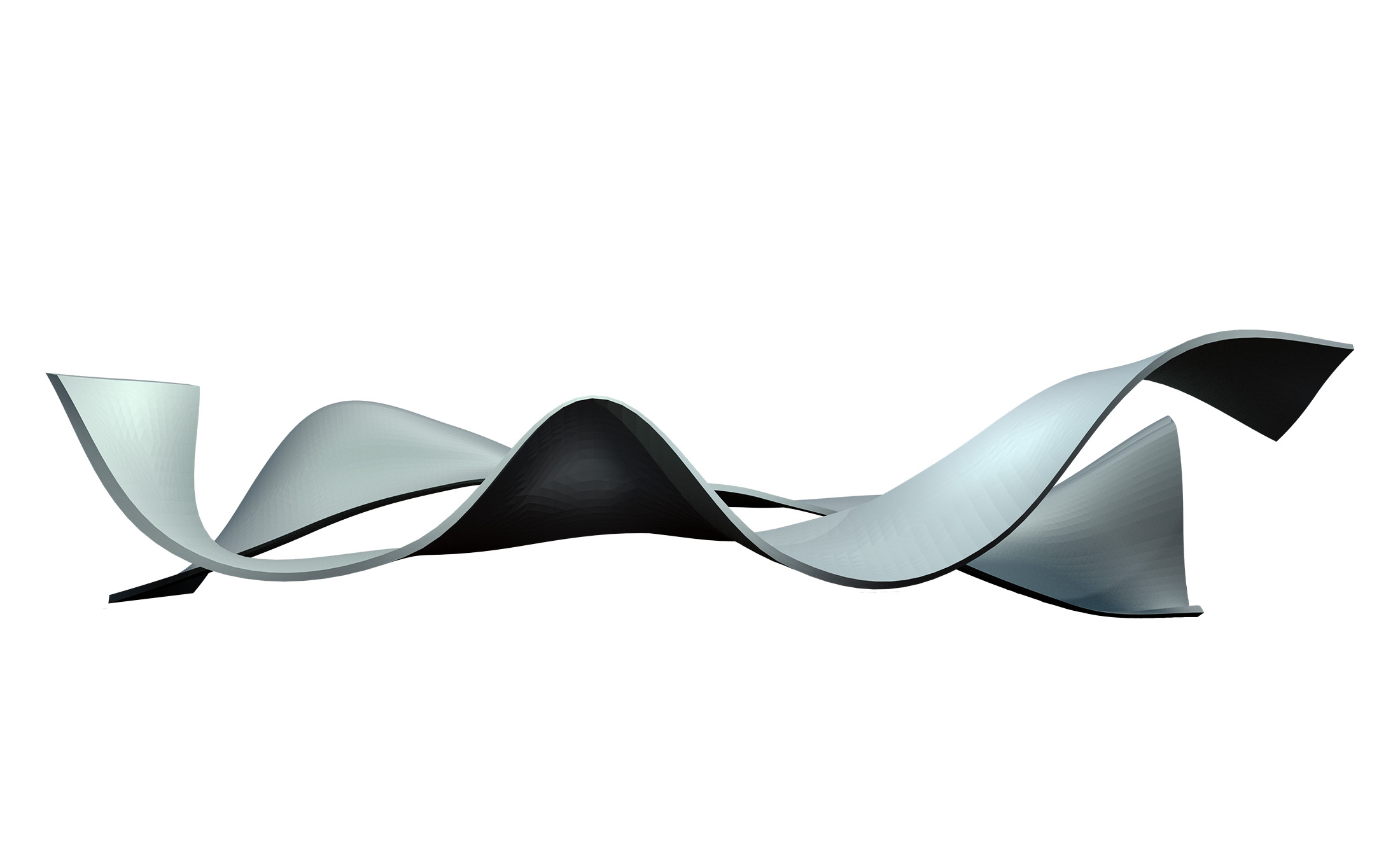
London's City Scale Sculpture
Virtuality – Interwoven Sculpture: Radical and Absolute
Sculpture is no longer material that is experienced by touching. It manifests itself as a virtual reality in the outdoor space. The environment, i.e. the space, remains tangible. The observer is on-site and can perceive, feel, smell and hear the place with all his senses. The virtual sculpture requires an extended perception. It becomes a truth that can only be experienced on site relating to the analogue space. Digital tools allow its perception. It is not a pure virtual reality, but rather an interweaving of the material space with a virtual manifestation of a sculpture. This sculpture cannot become matter. It exists in this meta-level between digitality and the analogue.