Documentation

A Selection of Projects

2026

The memorial for the Jehovah's Witnesses persecuted and murdered during the National Socialist regime, resolved by the German Bundestag in 2023

Pre‑inauguration impressions of the monument

While the sculpture is now present, the final landscaping will take place the next months. The lawn will be sown in the coming weeks. This autumn, final landscaping will add ten new trees—six birches, one hornbeam, one oak, and two yews—along with shrubs and flowering plants. A information board will also be installed, specifically designed to maintain open sightlines.

Construction 27th and 28th of May 2026

An Ascending Natural Form in the Space of Remembrance at the Historic Site

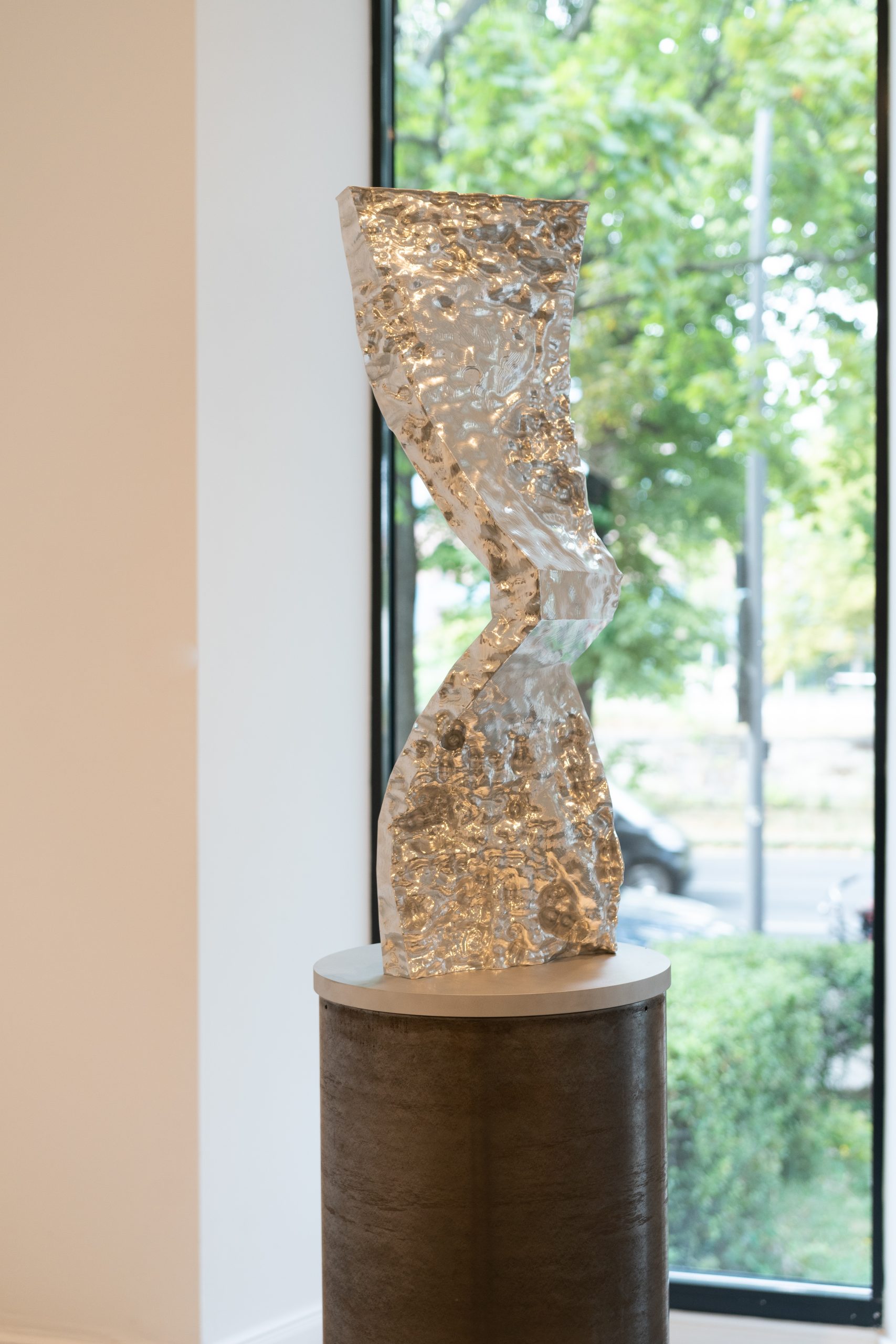
Embedded in the Berlin Tiergarten, the massive bronze sculpture—standing approximately five meters tall—materializes the stance of the Jehovah’s Witnesses persecuted and murdered under National Socialism: their final utterances did not speak of hopelessness, but of steadfastness and an enduring hope for a better future.

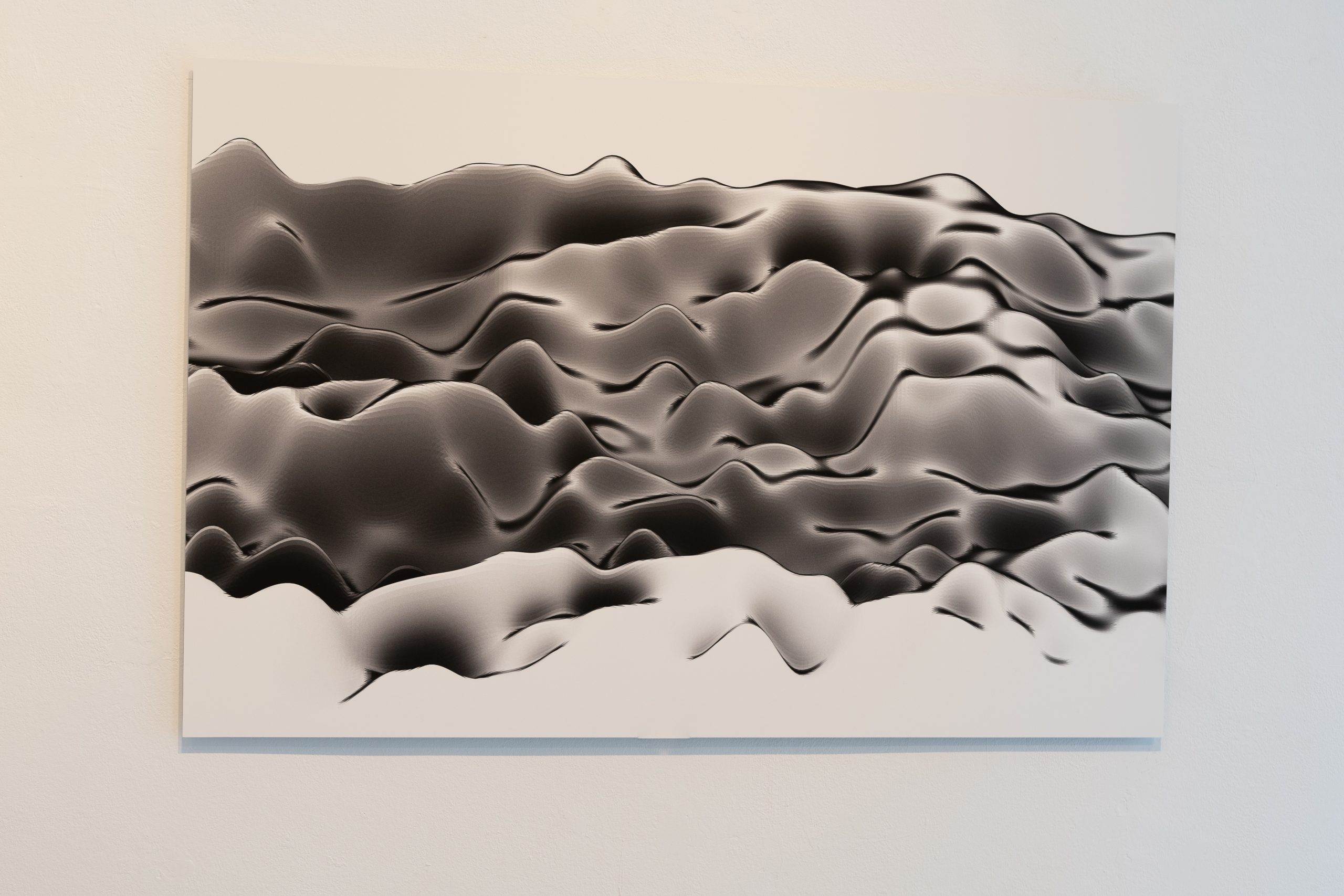
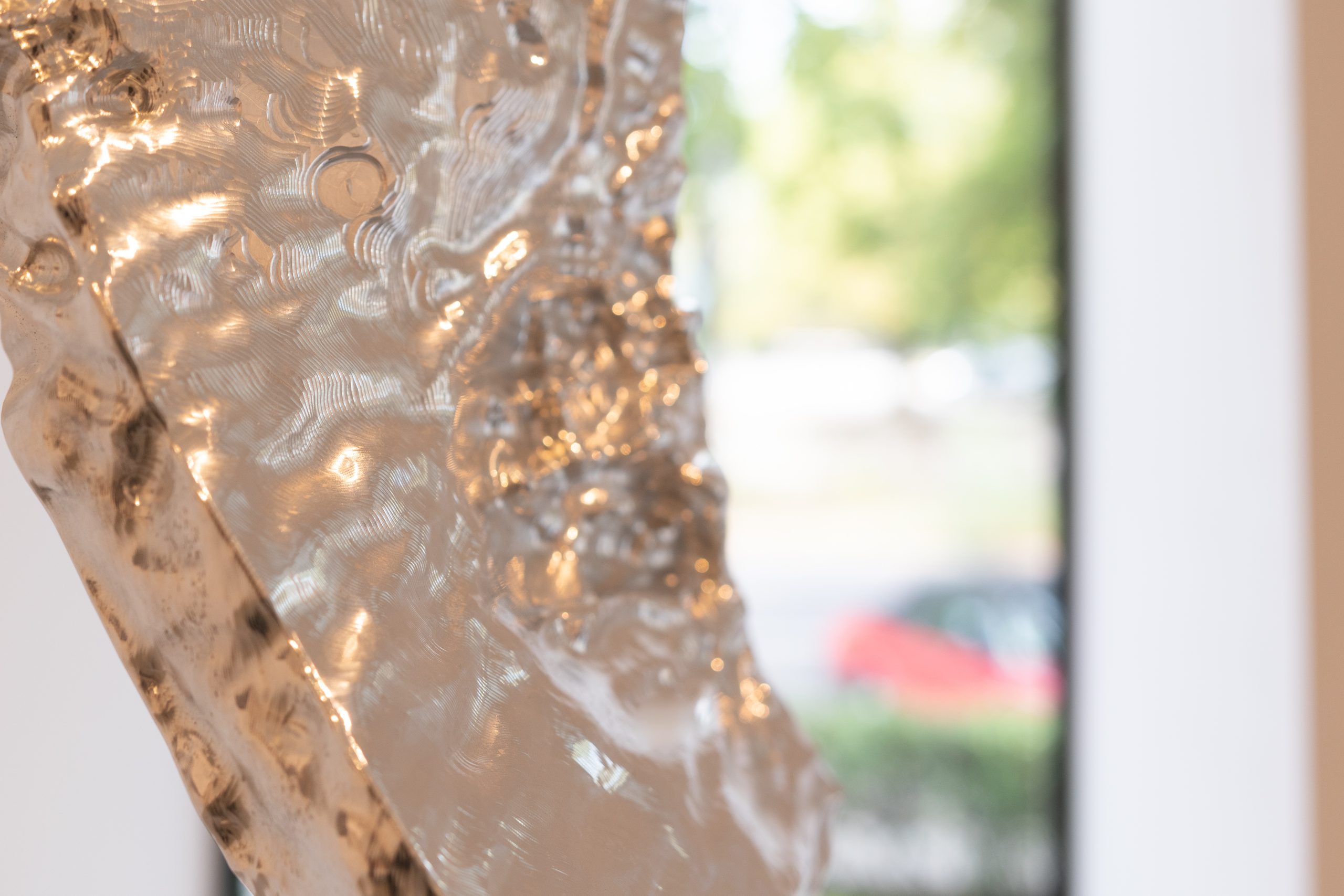
From a distance, the work presents itself as an ascending natural form; striking contours and deep indentations on the surface make the suffering of the persecuted sensorially and emotionally palpable. This design is grounded in artistic research: the luminosity values of collected and specially captured photographs from sites of persecution were digitally translated into an abstract topographic profile and inscribed into the bronze. Upon closer approach, a fine polygonal structure reveals itself, acting like an internal tectonic skeleton beneath the bronze skin. Visible milling marks introduce an organic dynamism that counteracts the geometric structure. As one circumambulates the sculpture, the shifting play of light causes visual fragments to appear and dissolve back into the material.

The artistic planning conceives the site as a cohesive design unity: the layout of the newly created water-bound gravel path and the precise composition of the new plantings are an integral part of the overall concept. Six birches, an oak, two yews, shrubs, flowering plants, and the existing trees create sightlines and integrate the sculpture organically. A distinct element of temporality lies in the untreated bronze; over the years, it develops a natural patina. This continuous chromatic transformation functions as an organic timestamp of remembrance, anchoring the permanence of memory within the shifts of the coming decades. In this way, the sculpture merges with the designed natural space into an ensemble that invites reflection on courage, moral courage, and tolerance.

– Matthias Leeck, 2026

Aufbau Mahnmal (Leeck mit Selbach) 28.05.26
© Alst, photo by Peter Maciol

2025

Shaping Future

How can artistic research contribute to interdisciplinary knowledge production? What new forms of collaboration are emerging between TU Berlin, NTNU Trondheim, and VBK? And what perspectives for future courses of action in challenging times does artistic-scientific collaboration open up?

We warmly invite you to the presentation of an interdisciplinary project initiative between the Norwegian University of Science and Technology (NTNU) and the Technical University of Berlin (TUB). Led by Prof. Andrew Perkis (NTNU) and Matthias Leeck (artist, researcher, and curator), this event will introduce the vision and approach behind our collaborative efforts. Additionally, an ongoing artistic research project—developed with support from TU Berlin—will be showcased, providing insights into creative methodologies in academic contexts.

We look forward to your participation and an inspiring exchange!

2024

As the project leader of „Augmented Realities in the Anthropocene,“ I reflect on an intensive and inspiring symposium that marked a significant milestone in our two years of work. It provided an excellent opportunity to explore the intersections of art, science, and technology within the context of the Anthropocene. The central themes—Anthropocene, artistic research, and augmented reality—were examined from diverse perspectives. We discussed how art can help understand and communicate the challenges of this epoch and highlighted artistic research as an independent mode of inquiry. Augmented reality was broadly interpreted, not merely as a technological tool but as a means to expand perceptions of reality and artistic expression.

The symposium’s varied formats were particularly valuable. The panel discussion, “Current Positions Between Artistic Practice and Research in the Anthropocene,” moderated by Dr.Axel Berg, showcased innovative approaches from both art and science, emphasizing the importance of interdisciplinary collaboration. Artist talks and presentations provided fascinating insights into projects, such as Dr.Johann Reißer’s Shells and Loops and my Interwoven Sculptures. A discussion on the project über.wunden illustrated how art can contribute to the processing of trauma.

The symposium raised critical questions that will continue to engage us: the balance between collectivity and individuality in artistic research, the archiving of creative processes, the role of AI in art and society, and the need for alternative funding models. It also emphasized that augmented reality is not just a technological extension but a conceptual one, enriching perspectives and forms of expression.

I had the oppurtunity to participate at the closing discussion with Prof. Andrew Perkis (NTNU Trondheim), Wendy Ann Mansilla (PhD), Prof. Ceenu George (TU Berlin), Silke Bartsch and Dr. Michael Fowler (TU Berlin), which underscored the importance of interdisciplinarity and provided valuable insights for future collaboration between art, technology, and the humanities.

In summary, the symposium was a great success, offering crucial impulses for the future of this dynamic and evolving field. The discussions were constructive and forward-thinking, underscoring the essential role of collaboration among art, science, and technology in addressing the challenges of the Anthropocene.

The full video documentation is available on YouTube through the following link, which leads directly to the playlist.

Project funded by:

Logo Willy Brandt Stiftung

2023

Zur Ausstellungskonzeption


Eine mögliche Fragestellung im Rahmen der künstlerischen Anthropozänforschung ist, inwieweit sich die Wahrnehmung natürlicher oder gesellschaftlicher Entwicklungen durch künstliche und vielleicht virtuelle Sinnesmöglichkeiten verändert. Aus künstlerischer Sicht ergeben sich sowohl neue inhaltliche Felder, die erforscht werden können, sowie neue Techniken, die innerhalb künstlerischer Praktiken integrierbar sind. Potenzial bietet auch die Frage nach neuen Möglichkeiten der Interaktion der Betrachtenden mit den gestalteten Objekten – seien sie virtuell oder analog. Die konkrete Erfahrung sinnlicher Aspekte im Kontext der lokalen, kulturellen und sozialen Referenzen entspricht einer Aufforderung zur Reflexion der eigenen Wahrnehmung und ebendieser Aspekte. Allerdings beschränkt sich die künstlerische Betrachtung nicht allein auf technische Blickwinkel. Virtualität verwies schon vor den aktuellen technischen Entwicklungen auf einen Aspekt der Realität, der ideell aber dennoch real ist.


Die Ausstellung zeigte Werke, die im Prozess Begriffen sind. Es sind keine Meisterwerke im Sinne einer Arbeit, die zum Abschluss gekommen ist, sondern Werke die im Rahmen der Ausstellung von und mit den Ausstellenden diskutiert werden. Präsentiert werden in erster Linie Konzepte und künstlerische Experimente.

Adresse: Schöneberger Ufer 57 | 10785 Berlin

https://vbk-art.de/erweiterte-realitaeten/

Podiumsdiskussion - Zwischen Kunst und Wissenschaft

2022

Beginne damit, deinen Suchbegriff oben einzugeben und drücke Enter für die Suche. Drücke ESC, um abzubrechen.

Diese Website setzt Cookies ein, um ein optimales Bedienen zu ermöglichen. In unseren Cookie-Richtlinien erfahren Sie, was Cookies sind und wie Sie sie deaktivieren können. Per Klick auf „Zustimmen“ akzeptieren Sie den Einsatz von Cookies.  Mehr erfahren